
Momentum Builds for Nuclear Innovation
4 March 2025 - A Weekly Publication by New North Ventures

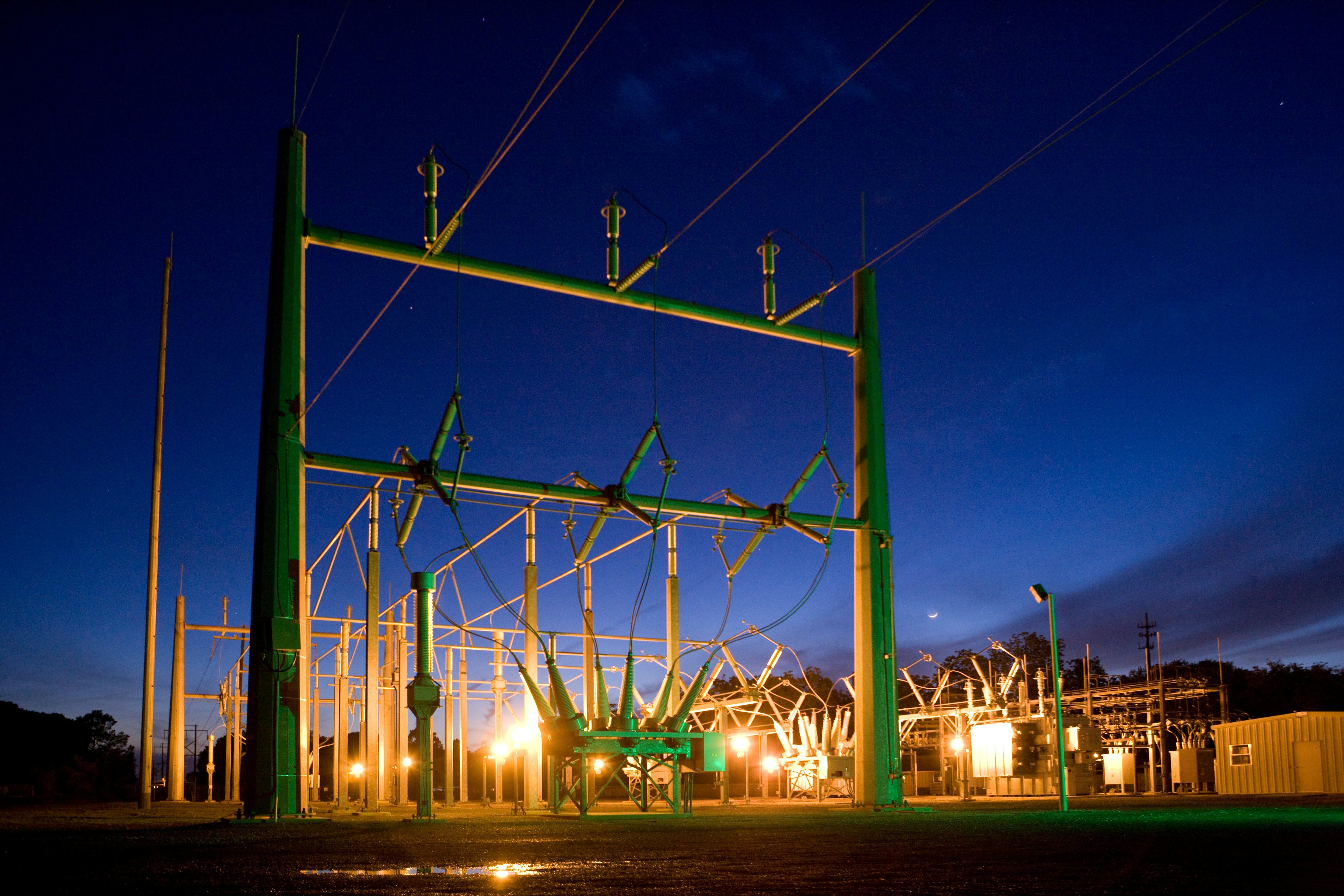
New Hampshire Positions Itself as New England’s Nuclear Innovation Hub
A significant opportunity is taking shape in the Northeast and a New North Ventures portfolio company is helping New Hampshire seize it.
StarCube is spearheading an effort to position New Hampshire as a respondent to the Department of Energy’s new Request for Information on nuclear innovation campuses. The DOE is actively soliciting state level interest to identify where the next generation of nuclear development, research, and workforce infrastructure should be anchored and StarCube is making the case that New Hampshire belongs on that shortlist.
To build the broadest possible coalition, StarCube has launched a dedicated hub at newenglandnuclear.org/nh-rfi to connect businesses, organizations, and individuals across the advanced nuclear, legacy nuclear, workforce development, nuclear waste management, and clean energy sectors. The effort reflects a core insight this community understands well: the line between energy security and national security is not a line at all.
The strategic rationale is compelling. New Hampshire is the only state in New England that currently permits new nuclear development, a regulatory posture that makes it uniquely positioned to attract the kind of long horizon investment and federal partnership that advanced nuclear requires. That matters beyond state borders: the ISO NE grid serves all of New England and ranks among the most expensive electricity markets in the United States. New nuclear capacity developed in New Hampshire won’t just serve local ratepayers, it will provide meaningful price relief across the region while strengthening grid resilience at a time when energy reliability has become a serious security consideration.
If your company or organization wants to engage, the call to action is straightforward. Review the DOE RFI directly at sam.gov, and join the coalition StarCube is assembling at newenglandnuclear.org/nh-rfi. The window to shape New England’s energy and security future is open and New Hampshire is moving. Interested in learning more? Reach out!

The Next Theater of Competition Is the Water and the UK Knows It
A development out of the United Kingdom this week deserves more attention than it will likely receive in American defense and technology circles. Babcock has partnered with Tech Southwest to launch a National Marine Autonomy Accelerator, focused specifically on high growth companies working in autonomous marine systems and technologies. oceannews
This is not a generalist startup program with a maritime veneer. It is launching just months after Plymouth was designated as the UK’s National Centre for Marine Autonomy, and the Southwest of England is increasingly being recognized as the UK’s leading hub for advanced marine technologies. The British government and its defense industrial base are deliberately concentrating capability, geographic, institutional, and financial around a domain that is moving faster than most traditional procurement systems can track.
Maritime autonomy sits squarely in the dual-use space this community watches closely. Uncrewed surface vessels, autonomous underwater systems, AI enabled maritime domain awareness are just some technologies that have obvious commercial applications and equally strong national security implications. Babcock’s Global Technology Director stated the intent is to build the accelerator to support and ultimately integrate the most forward thinking SMEs into the wider capabilities delivered for defense customers. oceannews
The program culminates in an Investor Day in October 2026 and is open not only to companies already operating in the marine sector, but also to those looking to move into this high growth area. The UK is not just organizing its existing maritime tech base, it is actively recruiting new entrants into the sector, betting that the opportunity is large enough to expand the talent pool rather than simply sort it.
For American companies and investors operating in maritime autonomy, uncrewed systems, or adjacent dual-use technologies, the implications run in two directions. First, this is a signal worth calibrating against: a close ally is institutionalizing its advantage in a domain where competition, including from near peer adversaries, is intensifying rapidly. Second, it is a partnership opportunity. The accelerator’s structure, its connection to Babcock’s defense relationships, and the University of Plymouth’s research capabilities create genuine transatlantic engagement pathways for U.S. firms thinking seriously about allied market access and co-development.
The details and application information are available at techsouthwest.co.uk/growth-forge. If maritime autonomy is in your portfolio or your strategy, this is one to watch.
Why Iran: The Asymmetric Shield
Iran's military strategy was never about matching the US plane-for-plane. Instead, Tehran built an arsenal of thousands of low cost drones, 3,000+ ballistic missiles, and a regional proxy network, asymmetric capabilities designed to create a conventional shield dense enough to make any strike on its nuclear program too costly to attempt. Cheap drones that overwhelm advanced air defenses through sheer volume, raising the price of intervention while nuclear development proceeds behind the curtain.
The February 2026 US-Israel operations are designed to dismantle that shield and the program behind it simultaneously, without ground forces. The campaign is layered: kinetic strikes against air defenses, missile sites, and command and control, combined with cyber operations and electronic warfare targeting Iran's communications and launch infrastructure. It's a case study in how modern conflict increasingly relies on standoff precision, signals disruption, and domain convergence rather than traditional occupation.
Hamlet Yousef mentioned an often overlooked dimension: a 2022 Middle East Institute paper documents how the IRGC's senior ranks are increasingly shaped by Mahdist ideology, which frames the missile program, militia network, and nuclear pursuit not as separate policy tracks but as pillars of a single mission. Western analysts have largely treated Iran's behavior as rational state interest. The MEI researchers argue that's an incomplete picture and one reason the asymmetric buildup has been so persistent despite decades of sanctions.
Source: MEI "Iran's Revolutionary Guard and the Rising Cult of Mahdism" (Golkar & Aarabi, 2022)
More links to explore:
[Virtual Event] Shields Up: Key Technologies Reshaping Cybersecurity Defenses Mar 19, 2026
Why California is Reconsidering Nuclear Energy After 50-Year Ban
Boston Tech Week is Coming Soon May 26-31

CYBERA’s Recorded Future Partnership
Big news from one of our portfolio companies. Recorded Future has expanded its payment fraud prevention capabilities through a partnership with CYBERA, integrating CYBERA’s Money Mule Intelligence directly into the Recorded Future Platform recordedfuture. This puts CYBERA’s technology in front of one of the most respected names in threat intelligence. The timing couldn’t be better: APP fraud losses in the U.S. are projected to reach nearly $15 billion by 2028, and regulators are increasingly shifting liability to banks that fail to detect mule accounts recordedfuture, creating urgent and growing demand for CYBERA’s technology. Unlike probabilistic risk scoring, CYBERA verifies each account with evidence and contextual metadata, and large financial institutions have already prevented multiple six-figure losses by embedding CYBERA’s intelligence into their transaction monitoring workflows. With a Recorded Future partnership on the books, Mastercard Start Path membership secured, and enterprise wins already on the board, CYBERA is heading into its Series A raise with the kind of proof points that make the conversation very different.
HawkEye 360 Expands Partnership with European MoD Clients
HawkEye 360 has been selected by a European Ministry of Defense for an electronic warfare program valued at up to $75 million. This contract reflects both the company’s deepening international footprint and the broader surge in European defense investment following years of underinvestment in sovereign ISR capability. Under the contract, HawkEye 360 will deliver subscriptions to its Air Defense and GPS Interference Monitoring services, enabling the customer to monitor and assess activity across areas of interest. This win follows a string of recent contract actions including a U.S. Navy renewal focused on Indo-Pacific maritime domain awareness and an NRO selection for tactical RF data and analytics, cementing HawkEye 360’s position as the go-to commercial provider for space based signals intelligence on both sides of the Atlantic.
Thanks for reading Securing Our Future! Subscribe for free to receive new posts and support my work.