
Can You Grow an Antenna?
8 July 2026 - A Weekly Publication by New North Ventures

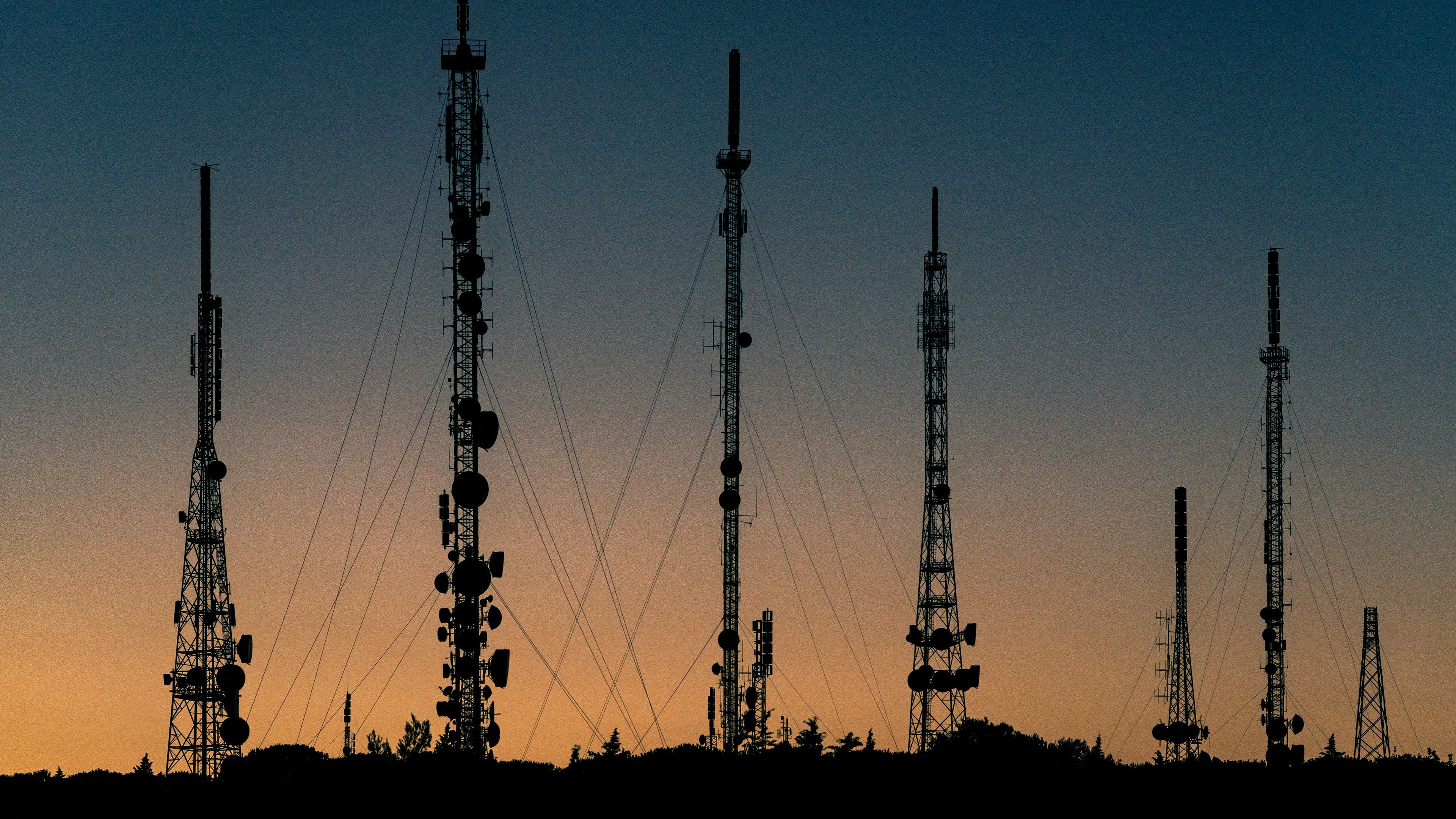
DARPA's biological aperture question and the emerging stack for living, programmable RF infrastructure
Aperture is Density
Radio frequency systems are usually described as radios, antennas, radars, and arrays, but the underlying economic variable is aperture. A larger effective aperture can capture more electromagnetic energy, improve directivity, sharpen spatial discrimination, and provide greater control over where a signal is received or projected. Today, that aperture is normally manufactured from metal, dielectric materials, semiconductors, cabling, and precision electronics. The cost and complexity of assembling those components help explain why high performance RF systems remain expensive, power intensive, and difficult to deploy at scale.
DARPA is now asking a question that recasts the problem. On its Ideas Under Incubation page, the agency asks, “Can we create functional bio-apertures with tunable properties?” (Defense Advanced Research Projects Agency [DARPA], n.d., “Biological apertures” section, para. 1). The same prompt asks how biochemical and microbial interventions might enhance metal uptake and sequestration in selected plant species, then connects that biological process to microsystem design. DARPA explicitly labels the page as exploratory rather than a formal solicitation, which makes the idea less a program announcement than an invitation to assemble a new technical field (DARPA, n.d.).
Taken literally, a biological aperture sounds like science fiction. A more disciplined interpretation is a hybrid RF structure in which biology supplies area, growth, morphology, material transport, and some capacity for repair, while engineered materials and conventional electronics provide conductivity, switching, sensing, calibration, and control. No cited experiment demonstrates a field-ready biological radar or phased array. The significance is that several enabling components already exist independently, and their convergence creates a credible research and venture frontier.
The Aperture Is Moving Into the Environment
The first enabling trend is the relocation of RF function from a discrete radio into the surrounding environment. MIT researchers Venkat Arun and Hari Balakrishnan developed RFocus, a six-square-meter surface containing 3,720 inexpensive elements that either transmit or reflect an incident signal. Their central move was conceptual as much as technical: RFocus “moves beamforming functions from the radio endpoints to the environment” (Arun & Balakrishnan, 2019, p. 1). A software controller configured the surface using receiver signal strength measurements, producing a 10.5-fold improvement in median signal strength and a 2.1-fold improvement in median channel capacity in the prototype (Arun & Balakrishnan, 2019).
RFocus was not biological, but it established an important architecture. A small device does not need to carry the entire aperture if the environment can supply area and a controller can organize the resulting electromagnetic behavior. This shifts the commercial question from building a better radio alone to building surfaces, materials, and control systems that make the environment part of the radio. Biological apertures extend that logic by asking whether a portion of the physical surface can be grown, modified, and maintained through living processes.
Plants Already Receive RF Energy
The second enabling trend is direct evidence that living plants can participate in RF systems. Researchers at the Istituto Italiano di Tecnologia modified leaves with a thin elastomeric coating and combined wind-driven contact electrification with radio-frequency energy harvesting. In the paper’s abstract, Meder et al. (2022) report that “the same plant is used as an unmatched Marconi-antenna.” The plant functioned as an ionic receiving antenna for multiband RF energy, and the combined wind and RF harvesting system accumulated enough energy to operate a commercial temperature and humidity sensor that transmitted environmental data wirelessly (Meder et al., 2022).
This experiment should not be confused with a high-gain antenna array. It demonstrated low-power energy conversion, not coherent radar, precision beamforming, or high-rate communications. Its importance lies elsewhere. A common living plant acted as a functional electrical structure across multiple RF bands, integrated with conventional circuitry, and continued to provide biological attributes such as growth and self-repair. That is a foundational proof point for any thesis in which living matter contributes to the physical layer of a sensing or communications system.
Living Systems Can Sense and Report
A third line of research shows that plants can do more than passively interact with electromagnetic energy. Wong et al. embedded carbon-nanotube nanosensors into spinach leaves so that the plants could detect nitroaromatic compounds transported from groundwater into leaf tissue. The researchers described the engineered plants as “infrared communication platforms that can send information to a smartphone” (Wong et al., 2017, Abstract, para. 1). In effect, the plant served as a self-powered sampler, biological transport system, sensor host, and communications interface (Wong et al., 2017).
The relevance to biological apertures is architectural rather than frequency specific. The nanobionic spinach did not transmit conventional RF signals, but it demonstrated that a living organism can gather materials from its environment, concentrate them through its vascular system, host engineered nanoscale components, and communicate a resulting measurement to external electronics. DARPA’s interest in enhancing metal uptake and sequestration suggests a related systems logic: use biological transport and accumulation to place electromagnetically useful material inside or along a living structure, then connect that structure to microsystems that make the material operational.
RF Materials No Longer Need to Look Like RF Hardware
A fourth enabling trend comes from additive manufacturing and conductive polymers. Yurduseven et al. built a holographic metasurface antenna for 10 GHz operation using a biodegradable conductive polymer for the conducting regions and polylactic acid for the dielectric substrate. The authors emphasize that “The entire metasurface antenna is 3D printed at once” (Yurduseven et al., 2018, p. 1). Their experiments demonstrated high-fidelity focusing in the antenna’s Fresnel region, while also showing that material conductivity remained a critical determinant of radiation performance (Yurduseven et al., 2018).
The result matters because it separates RF function from the assumption that every aperture must be machined from conventional metal assemblies. Conductive polymers, printed structures, embedded nanoparticles, and biologically accumulated metals offer a wider material design space. Biology will not eliminate the conductivity requirement, and low-conductivity materials impose real efficiency penalties. It may, however, supply inexpensive, conformal, and spatially distributed scaffolding onto which electromagnetically functional materials can be deposited, transported, or organized.
Growth Can Become a Fabrication Process
The fifth enabling trend is partial control over biological growth. The flora robotica project combined natural plants, robotic scaffolds, sensors, light, and hormones to explore living architectural systems with continuous growth and self-repair. Hamann et al. (2017) explain that “User-defined design objectives help to steer the directional growth of the plants” (p. 1). The project used phototropic and shade-avoidance responses to guide climbing plants through mechanical structures, demonstrating that growth can be influenced toward desired geometries even when the process remains slower and less deterministic than industrial fabrication (Hamann et al., 2017).
That distinction is essential. A future biological aperture would not emerge from the ground with the precision of a lithographically produced array. The more realistic model is guided growth around a scaffold, followed by measurement, functionalization, and computational calibration. The biological structure would provide area and evolving geometry. Conventional engineering would impose enough order to make that imperfect structure useful.
What the First Biological Aperture Would Probably Look Like
A plausible first-generation bio-aperture, inferred from these research lines, would be hybrid at every layer. A plant, fungal network, or engineered living material could provide a large and conformal substrate. Biochemical interventions could increase the uptake or localization of selected metals. Conductive polymers, coatings, or nanoparticles could create more reliable current paths. Small conventional nodes could provide impedance matching, switching, sensing, telemetry, and power management. A software controller could maintain a digital model of the structure and compensate for changes in geometry, hydration, temperature, growth, or material distribution (DARPA, n.d.; Hamann et al., 2017; Meder et al., 2022; Yurduseven et al., 2018).
The first useful products would probably be passive or low power. Candidate functions include environmental spectrum monitoring, RF energy harvesting, frequency-selective surfaces, low-power reflectors, conformal receiving structures, or distributed sensing around farms, forests, buildings, borders, and critical infrastructure. Coherent transmission, high-power operation, and precision radar would require much tighter control over conductivity, phase, element spacing, feed networks, heat, and calibration. The near-term opportunity is therefore not a tree that replaces an exquisite radar. It is a new class of living or bio-derived surfaces that contribute useful area and electromagnetic function to a conventional system.
Where the Venture Stack Could Form
The biological layer offers one potential company-formation point. Tools that control metal uptake, transport, localization, and sequestration could become enabling platforms for more than RF, including environmental remediation, biomining, sensors, and advanced materials. The investable moat would likely reside in repeatable control over where functional material accumulates, how concentrations are measured, and how the process performs across species and field conditions. DARPA’s framing suggests that biology is not merely a substrate; it may be part of the manufacturing process itself (DARPA, n.d.).
The materials and interface layer offers a second opportunity. Tissue compatible conductive polymers, nanoparticles, coatings, electrodes, and low-power microsystems will be required to bridge wet, variable biological matter with dry, precision electronics. The winning architecture may be modular: biology supplies area and material transport, while standardized interface nodes supply switching, matching, calibration, and secure communications. This layer could mature before a complete biological aperture because each component also serves adjacent markets in wearables, agriculture, environmental sensing, soft robotics, and distributed infrastructure.
The computational layer may be the most leveraged. A biological aperture would be a moving, wet, heterogeneous RF object whose geometry and material properties change over time. Each deployed system could be slightly different. That complexity increases the value of electromagnetic simulation, inverse design, digital twins, synthetic RF data, adaptive calibration, and control software. RFocus showed that software can organize thousands of simple environmental elements without requiring each element to be an exquisite RF component (Arun & Balakrishnan, 2019). A biological system would push that principle further: imperfections would not be removed entirely through manufacturing, but measured and compensated for computationally.
The Investment Takeaway
DARPA’s biological-aperture question matters because it is an integration roadmap disguised as a speculative prompt. Researchers have already shown that beamforming can move into the environment, that plants can receive multiband RF energy, that living plants can host engineered sensors and communicate externally, that conductive polymers can form working microwave apertures, and that biological growth can be guided toward designed structures. None of these results proves that a useful biological aperture exists today. Together, they show that the category is no longer pre-science.
The first venture-scale winner may not market a biological antenna. It may sell the metal-uptake control system, the conductive biointerface, the embedded microsystem, the electromagnetic digital twin, or the calibration software that makes irregular living materials reliable. The enduring investment question is therefore not whether a tree can replace a radar. It is whether biology can become a programmable manufacturing and deployment layer for RF infrastructure, and which company will own the control point that makes that transition repeatable.
References
Arun, V., & Balakrishnan, H. (2019). RFocus: Practical beamforming for small devices. arXiv. https://doi.org/10.48550/arXiv.1905.05130
Defense Advanced Research Projects Agency. (n.d.). Ideas under incubation. Retrieved June 21, 2026, from https://www.darpa.mil/research/ideas
Hamann, H., Divband Soorati, M., Heinrich, M. K., Hofstadler, D. N., Kuksin, I., Veenstra, F., Wahby, M., Nielsen, S. A., Risi, S., Skrzypczak, T., Zahadat, P., Wojtaszek, P., Støy, K., Schmickl, T., Kernbach, S., & Ayres, P. (2017). Flora robotica: An architectural system combining living natural plants and distributed robots. arXiv. https://doi.org/10.48550/arXiv.1709.04291
Meder, F., Mondini, A., Visentin, F., Zini, G., Crepaldi, M., & Mazzolai, B. (2022). Multisource energy conversion in plants with soft epicuticular coatings. Energy & Environmental Science, 15, 2545-2556. https://doi.org/10.1039/D2EE00405D
Wong, M. H., Giraldo, J. P., Kwak, S.-Y., Koman, V. B., Sinclair, R., Lew, T. T. S., Bisker, G., Liu, P., & Strano, M. S. (2017). Nitroaromatic detection and infrared communication from wild-type plants using plant nanobionics. Nature Materials, 16, 264-272. https://doi.org/10.1038/nmat4771
Yurduseven, O., Ye, S., Fromenteze, T., Marks, D. L., Wiley, B. J., & Smith, D. R. (2018). 3D conductive polymer printed metasurface antenna for Fresnel focusing. arXiv. https://doi.org/10.48550/arXiv.1806.00394

More links to explore:

Exclusive: Auriga Launches Hypersonic Weather Testing Chamber
New North Ventures portfolio company Auriga Space has launched a specialized hypersonic weather testing chamber designed to accelerate the development and validation of materials and coatings used in hypersonic weapons systems. The chamber replicates extreme environmental conditions, including temperature, humidity, pressure, and atmospheric composition, that hypersonic systems encounter during flight.
As the government pushes to field hypersonic capabilities at speed, testing infrastructure has become a critical bottleneck, particularly for unsexy but mission critical components like thermal protection systems, sensor windows, and structural coatings. Auriga's facility addresses that gap by providing rapid, repeatable testing that can validate designs earlier in the development cycle, reducing risk and compressing timelines for programs under intense pressure to deliver operational capability.
Thanks for reading Securing Our Future! Subscribe for free to receive new posts and support our work.